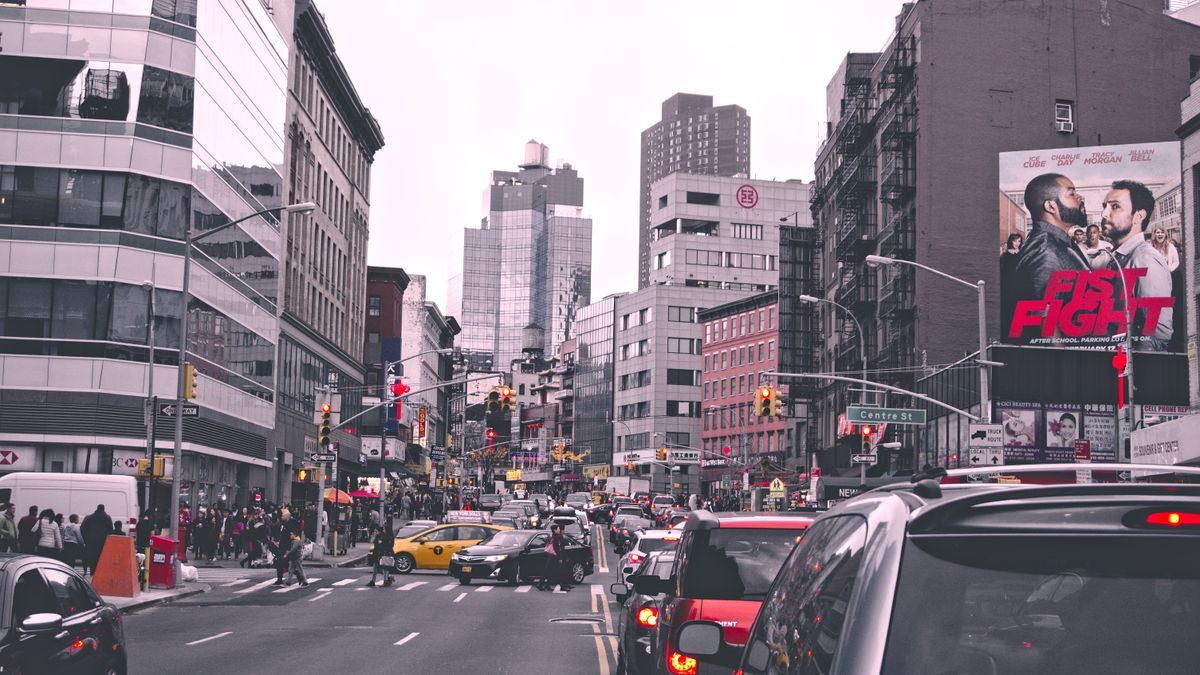
Congestion pricing NJ drivers face is New York’s toll on vehicles entering Manhattan at or below 60th Street, which began on January 5, 2025. Most New Jersey drivers with E-ZPass pay $9 at peak times (5 a.m. to 9 p.m. on weekdays and 9 a.m. to 9 p.m. on weekends) and $2.25 overnight, at most once per day. Drivers who come through the Lincoln or Holland tunnels get a crossing credit at peak times. In March 2026, a federal judge blocked the Trump administration’s attempt to end the program, New Jersey’s own lawsuit continues, and the toll is scheduled to rise to $12 in 2028 and $15 in 2031.
Key Takeaways
- The toll: $9 at peak and $2.25 overnight for cars with E-ZPass entering Manhattan at or below 60th Street.
- Once a day: passenger vehicles are charged only once per day, at the rate in effect at their first entry.
- Tunnel credit: E-ZPass drivers using the Lincoln or Holland tunnels get a crossing credit, but only during peak hours.
- Exempt routes: the FDR Drive and the West Side Highway are not charged if you stay on them.
- Future increases: the rate is set to rise to $12 in 2028 and $15 in 2031.
- Court fights: a federal judge rejected the Trump administration’s bid to end the program in March 2026; New Jersey’s lawsuit is ongoing.
Toll rates and rules follow the MTA’s congestion relief zone FAQ, and court updates follow news coverage, reviewed in September 2026.
Congestion Pricing NJ Toll Rates
| Vehicle and time | With E-ZPass |
|---|---|
| Car, peak (weekdays 5 a.m.–9 p.m.; weekends 9 a.m.–9 p.m.) | $9 |
| Car, overnight | $2.25 |
| Motorcycle | Charged under motorcycle rates in the same peak and overnight periods |
| Taxis, green cabs and black cars | $0.75 per trip, charged to the passenger |
| App-based rideshare (high-volume for-hire vehicles) | $1.50 per trip, charged to the passenger |
| Trucks and buses | Higher rates by vehicle size |
Drivers without E-ZPass are billed through Tolls by Mail at a higher rate. Therefore, if you drive into Manhattan even occasionally, an E-ZPass saves money.
How the Crossing Credit Works for NJ Drivers
New Jersey drivers who enter Manhattan through the Lincoln Tunnel or Holland Tunnel already pay a Port Authority toll. To account for that, the MTA gives E-ZPass users a crossing credit that reduces the congestion toll during peak hours. The same credit applies to the Queens-Midtown and Hugh L. Carey tunnels.
| Crossing | Crossing credit? |
|---|---|
| Lincoln Tunnel (E-ZPass, peak) | Yes |
| Holland Tunnel (E-ZPass, peak) | Yes |
| George Washington Bridge | No, because you enter Manhattan north of the zone |
| Any crossing, overnight | No; the credit applies only during peak hours |
| Tolls by Mail | No; the credit is for E-ZPass users |
Drivers who take the George Washington Bridge and then drive south into the zone on local streets pay the full congestion toll, since they did not use a credited tunnel.
What It Means for New Jersey Commuters
Drivers
A New Jersey commuter who drives into Midtown or Lower Manhattan every weekday at peak time now pays a Port Authority tunnel toll plus the congestion toll, minus the crossing credit. As a result, daily driving into the zone has become noticeably more expensive, while overnight and weekend-evening trips cost far less.
Transit riders
Riders on NJ Transit trains and buses, PATH and ferries do not pay the congestion toll directly. Commuter buses are exempt under the program. However, New Jersey officials have argued that more people shifting to transit could crowd trains and buses, and that traffic could be pushed onto roads in North Jersey.
Passengers pay a per-trip charge of $0.75 in taxis and $1.50 in app-based rideshares for trips in the zone. That charge is added to the fare.
New Jersey’s Legal Fight
New Jersey sued over congestion pricing under former Governor Phil Murphy, arguing that the federal environmental review did not properly consider the effects on New Jersey communities. A federal judge ruled against those claims. Governor Mikie Sherrill’s administration later amended the lawsuit, which remains ongoing.
Separately, the Trump administration tried to end the program by withdrawing federal approval. On March 3, 2026, U.S. District Judge Lewis Liman rejected that attempt in a 149-page decision, calling the federal bid “unlawful and unreasoned.” Further appeals are possible, so the program’s long-term future could still change.
| Date | Milestone |
|---|---|
| January 5, 2025 | Congestion pricing begins at a $9 peak toll for cars |
| March 3, 2026 | Judge Lewis Liman rejects the federal attempt to end the program |
| 2028 | Toll scheduled to rise to $12 |
| 2031 | Toll scheduled to rise to $15 |
Exemptions and Discounts
- Exempt vehicles include qualifying emergency vehicles, vehicles transporting people with disabilities, school buses and commuter buses.
- Low-income discount: the MTA offers a discount plan for eligible low-income drivers who register.
- Exempt roads: the FDR Drive, the West Side Highway and certain connections to the Hugh L. Carey Tunnel are not charged if you stay on them.
Tips to Save on Congestion Pricing NJ Costs
- Get E-ZPass to pay the lower rate and receive crossing credits.
- Use the Lincoln or Holland tunnel during peak hours to qualify for the credit.
- Travel overnight when possible, when the toll is $2.25.
- Stay on the West Side Highway or FDR Drive if your destination lets you avoid the zone.
- Consider transit, such as NJ Transit trains, buses, PATH or ferries.
- Park outside the zone, for example in New Jersey near a PATH or ferry terminal.
Congestion Pricing NJ Cost Examples
The examples below show how the congestion toll alone works for a New Jersey driver with E-ZPass. Port Authority crossing tolls are separate and are charged in addition.
| Trip | Congestion toll |
|---|---|
| Weekday 8 a.m. via the Lincoln Tunnel | $9, reduced by the peak crossing credit |
| Weekday 8 a.m. via the George Washington Bridge, then south into the zone | $9, with no crossing credit |
| Saturday 10 p.m. via the Holland Tunnel | $2.25 overnight rate; no credit at night |
| Second trip into the zone the same day | No additional charge for passenger vehicles |
| Staying on the West Side Highway only | No congestion toll |
For a daily peak-time driver, congestion pricing NJ costs add up over a month, so compare the total with a monthly NJ Transit pass or PATH fares.
Who Is Most Affected in New Jersey?
- Daily drivers from Bergen, Hudson and Essex counties who work in Midtown or Lower Manhattan.
- Tradespeople and small businesses who drive vans or trucks into the zone.
- Shift workers who travel at peak times without easy transit options.
- Occasional visitors who drive in for shows or dinners, although evening trips after 9 p.m. cost less.
Overall, congestion pricing NJ drivers face depends on when and where they enter Manhattan. Timing your trips, using a credited tunnel with E-ZPass or switching to transit are the main ways to manage congestion pricing NJ costs.
More NJ Commuter Guides
Compare every way into Manhattan in our guide to how far NJ is from NYC, and check what transit costs now in our coverage of NJ Transit fare changes. For real-time traffic before you drive, use 511 NJ traffic. Browse more in our NJ News section or on the homepage.
Frequently Asked Questions About Congestion Pricing NJ
How much is the congestion pricing toll for NJ drivers?
Cars with E-ZPass pay $9 at peak times and $2.25 overnight to enter Manhattan at or below 60th Street, once per day.
Do NJ drivers get a credit for the Lincoln or Holland tunnel?
Yes. E-ZPass users get a crossing credit during peak hours when entering through the Lincoln or Holland tunnels.
Do George Washington Bridge drivers pay congestion pricing?
Drivers who use the bridge and then drive into the zone pay the toll without a crossing credit.
Do NJ Transit riders pay congestion pricing?
No. Transit riders do not pay the toll directly, and commuter buses are exempt.
Will the congestion pricing toll go up?
Yes. It is scheduled to rise to $12 in 2028 and $15 in 2031.
Is New Jersey still suing over congestion pricing?
Yes. New Jersey’s lawsuit, amended under Governor Mikie Sherrill’s administration, remains ongoing.
What happened to the Trump administration’s attempt to end congestion pricing?
On March 3, 2026, U.S. District Judge Lewis Liman rejected it as unlawful.
What are the peak hours for congestion pricing?
Peak hours are 5 a.m. to 9 p.m. on weekdays and 9 a.m. to 9 p.m. on weekends.
Are the FDR Drive and West Side Highway charged?
No. Drivers who stay on the FDR Drive or the West Side Highway are not charged the congestion toll.
The Bottom Line
Congestion pricing NJ drivers pay is $9 at peak and $2.25 overnight with E-ZPass for entering Manhattan at or below 60th Street, charged once per day. Lincoln and Holland tunnel users get a peak-hour crossing credit, and transit riders do not pay the toll directly. With New Jersey’s lawsuit still ongoing and increases scheduled for 2028 and 2031, commuters should keep an eye on the rules and plan their routes and timing to limit the cost.
