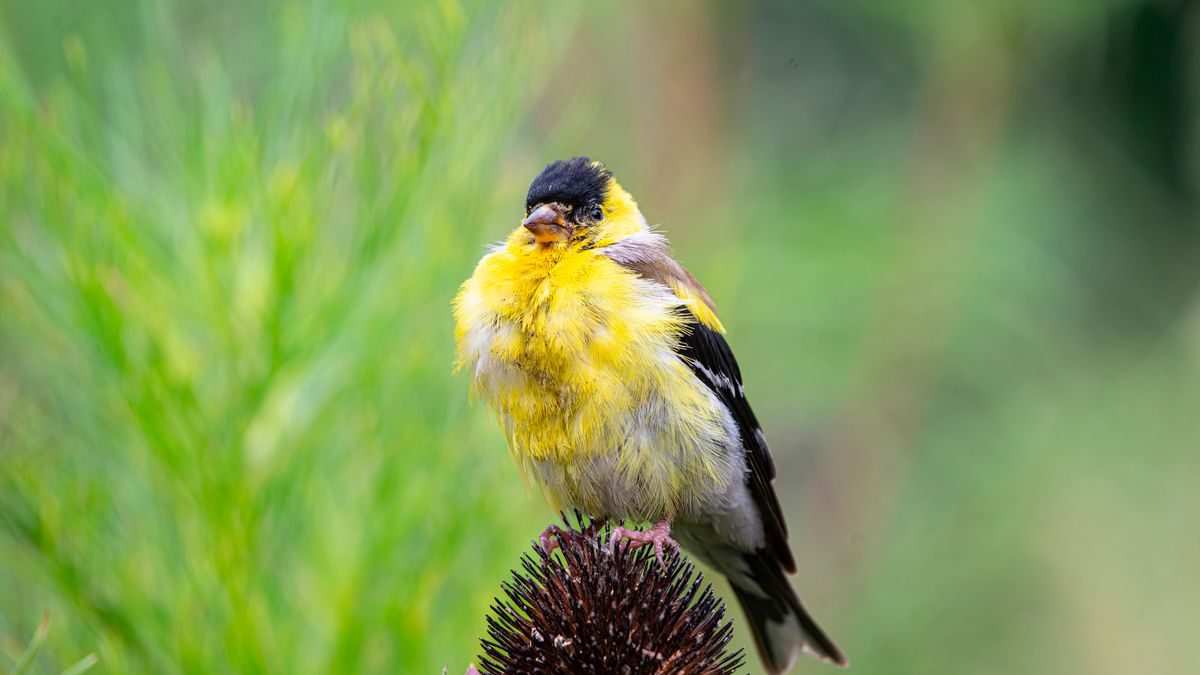
NJ state symbols include the Eastern goldfinch as the state bird, the common meadow violet as the state flower, the red oak as the state tree and the horse as the state animal. New Jersey’s nickname is the Garden State, its motto is “Liberty and Prosperity” and its official colors are buff and Jersey blue. Other official symbols range from the blueberry as the state fruit to Hadrosaurus foulkii as the state dinosaur.
Key Takeaways
- State bird: Eastern goldfinch.
- State flower: common meadow violet.
- State tree: red oak.
- State animal: horse, adopted in 1977.
- Nickname: the Garden State.
- Motto: “Liberty and Prosperity.”
- Colors: buff and Jersey blue, linked to George Washington’s Continental Army uniforms.
Symbols in this guide follow the official list published by the State of New Jersey, reviewed in September 2026.
Complete List of NJ State Symbols
| Symbol | Official choice |
|---|---|
| State bird | Eastern goldfinch |
| State flower | Common meadow violet |
| State tree | Red oak |
| State animal | Horse |
| State insect | Honeybee |
| State dance | Square dance |
| State dinosaur | Hadrosaurus foulkii |
| State dog | Seeing Eye dog |
| State fish | Brook trout |
| State fruit | Blueberry |
| State microbe | Streptomyces griseus |
| State mineral | Franklinite |
| State reptile | Bog turtle |
| State shell | Knobbed whelk |
| State ship | USS New Jersey |
| State tall ship | A.J. Meerwald |
| State colors | Buff and Jersey blue |
| State motto | “Liberty and Prosperity” |
| State nickname | The Garden State |
Adoption dates vary by symbol. For example, the horse was adopted in 1977, Hadrosaurus foulkii in 1991 and Streptomyces griseus in 2019, while the state seal dates back to 1777.
State Bird: Eastern Goldfinch
The Eastern goldfinch, also called the American goldfinch, is a small songbird. Males turn bright yellow with black wings in spring and summer, while their winter feathers are duller olive-brown. Goldfinches are common at backyard feeders across New Jersey, especially those stocked with thistle or sunflower seeds. Interestingly, the goldfinch is also the state bird of Iowa and Washington.
State Flower: Common Meadow Violet
The violet became New Jersey’s state flower by resolution in 1913, and it was officially designated by law in 1971. This small purple wildflower blooms in spring in lawns, meadows and woodland edges.
State Tree: Red Oak
The northern red oak grows throughout New Jersey and is known for its strong wood and red fall leaves. As a result, it is a familiar sight on autumn drives, alongside maples and hickories.
State Animal: Horse
The horse was named New Jersey’s state animal in 1977, reflecting the state’s long history of horse breeding and racing. Horses also appear on the state seal and flag. Today, horse farms, riding stables and racetracks can still be found across much of the state.
More Unique NJ State Symbols
State dinosaur: Hadrosaurus foulkii
In 1858, the first nearly complete dinosaur skeleton in the world was excavated in Haddonfield, Camden County. Named Hadrosaurus foulkii, it helped prove that dinosaurs existed and could walk on two legs. A statue in downtown Haddonfield honors the discovery.
State microbe: Streptomyces griseus
This soil bacterium was used to develop streptomycin, the first effective antibiotic against tuberculosis, at Rutgers University. That discovery helped Selman Waksman win the Nobel Prize in 1952.
State dog: Seeing Eye dog
The Seeing Eye, the oldest existing guide dog school in the United States, is based in Morristown. It has trained guide dogs for people who are blind since the early 1930s in New Jersey.
State fruit: highbush blueberry
The cultivated highbush blueberry was developed in the Pine Barrens at Whitesbog in the early 1900s by Elizabeth White and Frederick Coville. New Jersey remains one of the nation’s leading blueberry producers, with Hammonton often called the Blueberry Capital of the World.
State mineral: Franklinite
Franklinite is named after Franklin in Sussex County, where it was mined. The Franklin and Sterling Hill area is famous for fluorescent minerals that glow under ultraviolet light.
State tall ship: A.J. Meerwald
Built in 1928 in Dorchester, the A.J. Meerwald is a restored oyster schooner that now serves as a floating classroom on the Delaware Bay.
Why Is NJ Called the Garden State?
The nickname is usually credited to Abraham Browning of Camden, who described New Jersey as a barrel of good things to eat, open at both ends, at the 1876 Centennial Exhibition in Philadelphia. The nickname reflects the state’s farms, which supplied produce to New York and Philadelphia. Today, “Garden State” appears on license plates, and New Jersey remains a major producer of blueberries, cranberries, tomatoes and peaches.
State Motto, Seal and Flag
| Symbol | Details |
|---|---|
| Motto | “Liberty and Prosperity” |
| Seal | Designed in 1777; shows Liberty and Ceres, the goddess of agriculture, with a shield of three plows and a horse’s head |
| Flag | The state seal on a buff background, adopted in 1896 |
| Colors | Buff and Jersey blue, from the uniforms George Washington chose for New Jersey’s Continental Army troops |
Nature Symbols of New Jersey
State fish: brook trout
The brook trout is a native freshwater fish that needs cold, clean streams. In New Jersey, it lives mainly in the northern part of the state, where shaded mountain streams keep the water cool. Its presence is often a sign of healthy water quality.
State insect: honeybee
The honeybee pollinates many of the crops that give the Garden State its name, including blueberries, cranberries, apples and peaches. As a result, beekeeping remains an important part of New Jersey agriculture.
State reptile: bog turtle
The bog turtle is one of the smallest turtles in North America, usually only a few inches long. It lives in wet meadows and bogs, and habitat loss has made it rare. For this reason, it is protected as an endangered species in New Jersey.
State shell: knobbed whelk
The knobbed whelk is a large sea snail whose spiral shells wash up on Jersey Shore beaches. Beachcombers often find them along the southern coast, from Long Beach Island to Cape May.
Cultural NJ State Symbols
Not every symbol comes from nature. The square dance reflects community traditions, while the USS New Jersey honors the state’s naval history. The battleship served in World War II, Korea, Vietnam and the Persian Gulf era before becoming a museum on the Camden waterfront. Together, these symbols show that New Jersey celebrates both its landscape and its people.
How NJ State Symbols Are Chosen
Most NJ state symbols are created by laws passed by the Legislature and signed by the Governor. Ideas often come from teachers, students, scientists and local organizations who ask lawmakers to recognize something important to the state. Because the list keeps growing, new NJ state symbols are added from time to time, so the official state website is the best place to check the current list.
Fun Facts About NJ State Symbols
- Community campaigns: some symbols were adopted after campaigns led by schoolchildren and local groups.
- A world-first dinosaur: Hadrosaurus foulkii was the first nearly complete dinosaur skeleton ever found.
- A living state reptile: the bog turtle is one of North America’s smallest turtles and is endangered in New Jersey.
- A battleship symbol: the USS New Jersey is now a museum ship in Camden.
Learn More About New Jersey
The state seal and government are based in Trenton, which you can read about in our guide to the capital of NJ. To see where every town fits, explore our list of NJ towns by county. You can also spot red oaks and more on a scenic drive in our NJ fall foliage guide. Find more in our Living in NJ section or on the homepage.
Frequently Asked Questions About NJ State Symbols
Symbols of the Garden State
NJ state symbols tell the story of the state, from the Eastern goldfinch and violet to the horse, the red oak and the blueberry. Some reflect nature, while others honor science, history and service, such as the Seeing Eye dog and Streptomyces griseus. Together with the motto “Liberty and Prosperity” and the colors buff and Jersey blue, they make New Jersey’s identity easy to recognize.
