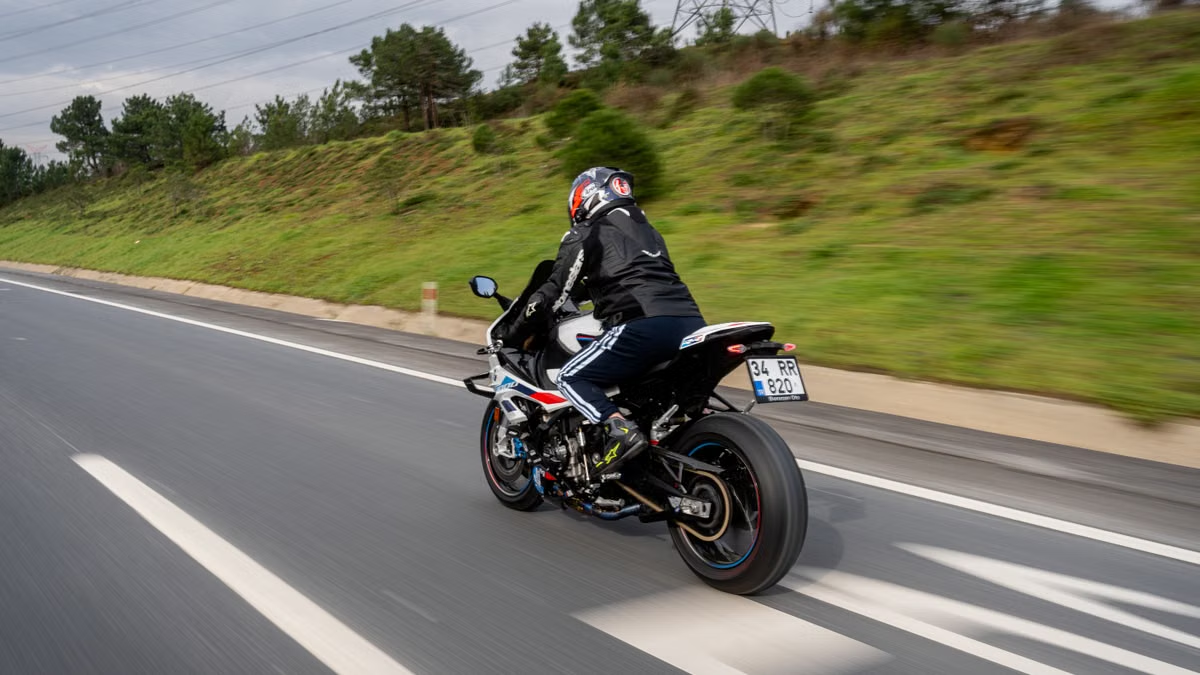
To get a motorcycle license NJ riders need either a motorcycle endorsement added to a regular New Jersey driver’s license (an “E” endorsement) or a motorcycle-only license, and applicants must be at least 17 years old. There are two main paths. The first is to complete an approved Basic RiderCourse through New Jersey’s Motorcycle Safety Education Program, which in most cases lets you skip the Motor Vehicle Commission (MVC) road test. The second is to pass the MVC motorcycle knowledge test and vision test, get a motorcycle permit, practice under the permit’s restrictions and then pass a road test at an MVC testing site. Permit holders may not carry passengers and may ride only during daylight hours. New Jersey requires every motorcycle rider and passenger to wear a DOT-compliant helmet, and eye protection is required if the bike has no windscreen. Many riders choose the course route because it teaches safe riding skills and often lowers insurance costs.
Key Takeaways
- Minimum age: 17.
- License types: an endorsement on your driver’s license, or a motorcycle-only license.
- Course route: a Basic RiderCourse usually waives the MVC road test.
- MVC route: knowledge test, vision test, permit and road test.
- Permit limits: no passengers and daylight riding only.
- Helmets: required for all riders and passengers.
- Insurance: motorcycles must be registered and insured.
Details come from NJ Motor Vehicle Commission guidance and New Jersey rider training resources, reviewed before publication. Fees, forms and test procedures change, so check the MVC website before you go.
Motorcycle License NJ at a Glance
| Requirement | Details |
|---|---|
| Minimum age | 17 |
| License type | E endorsement on a basic license, or motorcycle-only license |
| Knowledge test | Based on the NJ Motorcycle Manual |
| Vision test | At the MVC |
| Permit restrictions | No passengers, daylight riding only |
| Road test | At an MVC site, or waived with an approved course |
| Helmet | Required for rider and passenger |
Option 1: The Basic RiderCourse
New Jersey’s Motorcycle Safety Education Program works with approved training providers across the state that offer the Basic RiderCourse. The course combines classroom instruction with hands-on riding practice on a closed range, usually over a weekend, and training motorcycles and helmets are often provided. After you pass, you receive a completion card that you bring to the MVC, which in most cases lets you skip the MVC road test.
- Good for beginners who have never ridden.
- Often lowers insurance premiums.
- Fills up quickly in spring, so register early.
Option 2: The MVC Permit and Road Test
- Study the New Jersey Motorcycle Manual.
- Visit an MVC agency with your 6 Points of ID if you do not already have a license, pass the motorcycle knowledge test and vision test, and pay the permit fee.
- Get your motorcycle permit validated and practice riding.
- Follow permit rules: no passengers and no riding after dark.
- Schedule the road test and bring a registered, insured motorcycle in safe condition.
- Pass the road test and pay the license or endorsement fee.
What the Road Test Covers
| Skill | What examiners look for |
|---|---|
| Starting and stopping | Smooth control and correct braking |
| Turning | Proper lean, speed and lane position |
| Slow-speed control | Balance in tight maneuvers |
| Swerving and emergency stops | Quick, controlled reactions |
| Safety checks | Using mirrors, signals and head checks |
New Jersey Motorcycle Laws to Know
- Helmets: all riders and passengers must wear a helmet that meets federal standards.
- Eye protection: required unless the motorcycle has a windscreen.
- Registration and insurance: motorcycles must be registered with the MVC and insured.
- Lane splitting: riding between lanes of traffic is not legal in New Jersey.
- Passengers: the bike must be designed to carry one, with a seat and footrests.
- Visibility: riding with your headlight on and wearing bright gear helps drivers see you.
Mopeds and Scooters
Low-powered mopeds and some scooters follow different rules in New Jersey and may require a moped license, registration and insurance rather than a full motorcycle license. Larger scooters that meet the definition of a motorcycle require a motorcycle license. Check the MVC’s definitions before you buy a small bike, since the rules depend on engine size and top speed.
Tips for New Riders
- Take the course even if you already know how to ride.
- Buy proper gear: helmet, gloves, jacket, boots and eye protection.
- Start on a manageable bike and build experience gradually.
- Practice in empty parking lots before riding in traffic.
- Assume drivers cannot see you, especially at intersections.
- Get insurance quotes before you buy a motorcycle.
Motorcycle season in New Jersey runs mainly from spring through fall, and rider courses and MVC road test appointments are busiest in April and May. Planning your training over the winter helps you be ready to ride when the weather warms up.
If you are moving to New Jersey with a valid motorcycle license from another state, you can usually transfer it to a New Jersey license with the endorsement when you exchange your license at the MVC, without retaking the full tests.
Motorcycle License NJ Costs
| Cost | Notes |
|---|---|
| Motorcycle permit | Small MVC fee |
| License or endorsement | MVC fee based on license type and term |
| Basic RiderCourse | Set by each approved training provider |
| Gear | Helmet, gloves, jacket and boots |
| Insurance and registration | Required before riding on public roads |
Check the MVC fee schedule for current permit and license amounts, since fees are updated from time to time.
Motorcycle License NJ for Experienced Riders
Experienced riders who have been riding without a license, or who learned in another country, still need a motorcycle license NJ law recognizes before riding on public roads. The Basic RiderCourse is still a good option, since it teaches New Jersey rules and can waive the road test. Some training providers also offer advanced courses for skilled riders who want to sharpen their braking, cornering and hazard-avoidance skills.
Riding without a valid motorcycle license or endorsement can lead to fines and other penalties, and it can also cause problems with insurance claims after a crash. Getting properly licensed protects both your safety and your finances.
Once licensed, many riders join local riding clubs, which organize group rides to scenic areas such as the Delaware Water Gap and the Jersey Shore.
Motorcycle Safety in New Jersey
Motorcyclists are much more vulnerable than people in cars, so safe riding habits matter. Always wear a helmet and protective gear, avoid riding when tired or after drinking, and keep a safe following distance. Watch for sand, gravel and wet leaves on the road, especially on rural roads and in fall. Many crashes happen when drivers turn left in front of an oncoming motorcycle, so slow down and cover your brakes at intersections.
Getting a motorcycle license NJ riders can rely on is only the first step. Taking refresher courses every few years and practicing emergency braking in a safe place helps riders stay sharp throughout the season.
New riders should also plan where to practice after getting a permit. Quiet residential streets and empty parking lots on weekends are good places to build confidence before moving to busier roads and highways, and riding with an experienced, licensed rider nearby can help.
Finally, keep your license, registration and insurance card with you every time you ride, since police can ask to see them at any traffic stop.
Checking the MVC website before each step keeps you up to date on the latest requirements and appointment options.
More NJ Driving Guides
Renew your license with our NJ license renewal guide, plan scenic rides with our NJ fall foliage guide and find destinations in our things to do in NJ guide. Find more in our Getting Around section or on the homepage.
Frequently Asked Questions About Motorcycle License NJ
How old do you have to be to get a motorcycle license in NJ?
17.
Do I need a motorcycle license in NJ?
Yes. You need a motorcycle endorsement on your license or a motorcycle-only license.
Can I skip the road test for a motorcycle license in NJ?
Usually, yes, by completing an approved Basic RiderCourse.
What are the motorcycle permit rules in NJ?
Permit holders may not carry passengers and may ride only during daylight hours.
Do you need a helmet in NJ?
Yes. All riders and passengers must wear a helmet.
Is lane splitting legal in NJ?
No.
Do mopeds need a motorcycle license in NJ?
Low-powered mopeds follow separate rules; larger scooters may require a motorcycle license.
Can I transfer an out-of-state motorcycle license to NJ?
Usually, yes, when you exchange your license at the MVC.
Does a rider course lower motorcycle insurance?
Many insurers offer discounts to riders who complete an approved safety course.
How long is a motorcycle permit valid in NJ?
Check the MVC for the current validity period; practice and schedule your road test before it expires.
The Bottom Line
To get a motorcycle license NJ riders must be at least 17 and either complete an approved Basic RiderCourse, which usually waives the road test, or pass the MVC knowledge and vision tests, ride on a permit with no passengers and daylight-only riding, and pass the road test. Helmets are required for everyone on the bike.
